

Blog
Beetroot Benefits: How It Supports Nitric Oxide, Blood Flow, and Exercise Performance

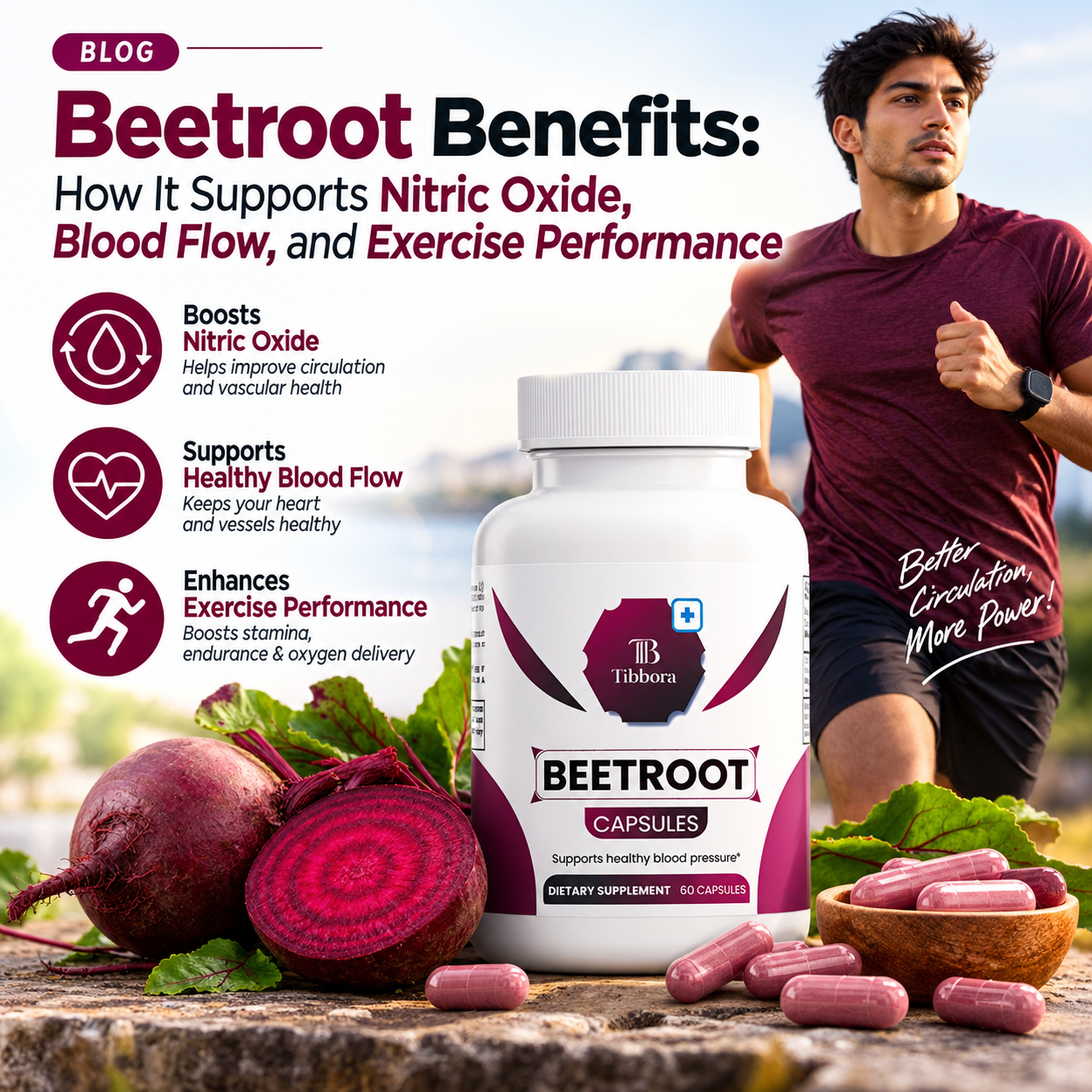
Beetroot is more than a colorful root vegetable. Known for its deep-red pigment and naturally occurring dietary nitrates, beetroot has attracted attention from nutrition researchers, athletes, and health-conscious individuals interested in circulation, exercise performance, and everyday wellness.
But what makes beetroot so interesting? How does it interact with the body's nitric oxide pathway, and can it really help support physical performance?
From understanding its nutritional properties to exploring beetroot powder and capsules, this guide explains what you should know before adding beetroot to your daily wellness routine.
In this article, you'll learn:
The nutritional properties that make beetroot interesting
How beetroot nitrates relate to nitric oxide production
Potential benefits for blood flow and exercise performance
The differences between fresh beetroot, beetroot powder, and capsules
How to choose and use a beetroot supplement responsibly
1. What Makes Beetroot So Special?
Beetroot (Beta vulgaris) is a root vegetable valued for its earthy flavor, vibrant color, and nutritional composition. It contains naturally occurring nitrates, dietary fiber, folate, potassium, and other plant compounds.
One of its most researched components is dietary nitrate. After consumption, nitrate can participate in a biological pathway that helps the body produce nitric oxide, a molecule involved in regulating blood vessel function.
This connection has made beetroot a subject of interest in research involving circulation, exercise efficiency, and cardiovascular function.
Beetroot can be enjoyed roasted, steamed, blended into smoothies, or consumed in juice and supplement form. Each option offers a different balance of convenience, preparation, and nutritional composition.
The key takeaway: Beetroot is not a miracle food, but its naturally occurring compounds make it an interesting addition to a balanced diet.

2. Beetroot and Nitric Oxide: Understanding the Connection
Nitric oxide is a signaling molecule produced by the body. One of its important functions is helping regulate the relaxation of blood vessels, a process known as vasodilation.
When blood vessels relax, they can widen, influencing blood flow and vascular function.
Beetroot is particularly interesting because its naturally occurring nitrates can contribute to nitric oxide production through a pathway involving the mouth and digestive system.
Here is the simplified process:
Dietary nitrate: You consume nitrate from foods such as beetroot and certain leafy vegetables.
Nitrate conversion: Some nitrate enters circulation and is concentrated in saliva, where oral bacteria help convert it into nitrite.
Nitric oxide formation: Nitrite can subsequently be converted into nitric oxide through processes involving the stomach and body tissues.
Vascular signaling: Nitric oxide helps signal blood vessels to relax, contributing to the regulation of normal blood flow.
This is one reason beetroot has become popular in sports nutrition and wellness discussions.
However, the amount of nitrate in beetroot products can vary considerably. A supplement's total beetroot powder weight does not automatically tell you how much nitrate it provides.
Why this matters: If you are comparing beetroot supplements, the amount of beetroot powder and the actual nitrate content are not interchangeable measurements.

3. Potential Beetroot Benefits for Everyday Wellness
Beetroot is often discussed in connection with several areas of health and physical performance. The strength of the evidence differs by outcome, and individual responses can vary.
Supports normal blood vessel function
Nitric oxide plays a role in regulating vascular tone, which influences how blood vessels widen and narrow.
Because dietary nitrate can contribute to nitric oxide production, researchers have investigated beetroot and nitrate-rich foods in relation to vascular function and blood pressure.
Some studies suggest that nitrate-rich beetroot products may modestly lower blood pressure in certain people. Results vary, however, and beetroot supplements should not replace prescribed medication or professional medical care.
May support exercise efficiency
During physical activity, the body needs to deliver oxygen and nutrients to working muscles.
Research has examined whether dietary nitrate can improve exercise efficiency, particularly during endurance activities. Some studies report benefits in certain settings, but results are mixed and depend on the activity, dose, training status, and individual response.
Beetroot should therefore be considered a possible nutritional support, not a guaranteed performance enhancer.
Provides useful plant nutrients
Whole beetroot contributes folate, potassium, fiber, and other plant compounds to the diet. These nutrients have established roles in normal bodily functions.
However, concentrated beetroot powder and capsules do not necessarily provide the same amounts of fiber, vitamins, or minerals as a serving of whole beetroot.
Fits into a plant-focused lifestyle
For people who prefer plant-derived ingredients, beetroot offers a familiar food-based option. It can be incorporated into meals or consumed in a supplement format when convenience is a priority.
A balanced diet, regular physical activity, adequate sleep, and appropriate medical care remain the foundation of long-term wellness.

4. Can Beetroot Help With Stamina and Workout Performance?
Beetroot has gained popularity among runners, cyclists, gym enthusiasts, and recreational athletes because of its naturally occurring dietary nitrates.
The scientific interest centers on whether nitrate supplementation can influence the amount of oxygen required during exercise and improve certain aspects of physical performance.
Some research suggests that nitrate-rich beetroot products may improve exercise economy or endurance performance in particular situations. Other studies show little or no measurable improvement.
The potential effects are not identical for everyone.
Endurance activities
Activities such as running and cycling have received considerable attention in beetroot research. Some individuals may experience improvements in exercise efficiency, although the findings depend on the study conditions and the athlete.
Muscle performance and resistance training
Beetroot supplements are also discussed in relation to gym performance. However, evidence for consistent improvements in strength, muscle growth, or resistance-training results is less established.
Beetroot should not be treated as a substitute for adequate protein intake, progressive resistance training, or sufficient recovery.
Workout preparation
People who use nitrate-rich beetroot products often consider the timing of consumption as part of their pre-workout routine. Research protocols commonly administer certain beetroot juice products a few hours before exercise, but this does not establish a universal timing rule for every capsule or powder.
Product composition matters. A capsule containing a specified weight of beetroot powder cannot automatically be assumed to produce the same effects as a studied nitrate-rich juice.
Practical takeaway: Beetroot may be worth exploring as one component of a well-planned fitness routine, but realistic expectations are essential.

5. Fresh Beetroot vs. Beetroot Powder vs. Capsules
Beetroot can be consumed in several forms. The best option depends on your dietary preferences, convenience needs, and what you want to get from the product.

Which option should you choose?
Choose fresh beetroot if you enjoy whole foods and want to include their fiber and broader nutritional profile in meals.
Choose beetroot powder if you prefer mixing a supplement into smoothies or other drinks.
Choose beetroot capsules if you want a portable format without juicing, blending, or measuring powder.
One important distinction applies to all three options: the quantity of beetroot does not necessarily reveal the quantity of dietary nitrate. If nitrate intake is your primary consideration, look for transparent product information rather than relying on the headline milligram amount alone.

6. How to Choose a Beetroot Supplement
Not every beetroot supplement is formulated in the same way. Before purchasing, consider these factors.
Check the ingredient list
Look for the stated beetroot species and the amount of beetroot powder per serving. Additional ingredients, capsule materials, and processing details can help you understand what you are purchasing.
Understand the nitrate content
A product containing 1,300 mg of beetroot powder does not necessarily contain a known or standardized quantity of nitrate.
If your main interest is nitrate-related exercise research, check whether the manufacturer provides a measured nitrate amount per serving.
Consider serving size and convenience
Compare the number of capsules per serving with the total number in the bottle. This helps you understand how the product fits into your routine and how long the bottle may last.
Look for transparent product information
Reliable product listings should clearly explain the ingredients, serving instructions, manufacturer details, and relevant safety information.
Independent testing or appropriate quality documentation can provide additional reassurance when available.
Avoid exaggerated promises
Be cautious of supplements advertised as guaranteed muscle builders, treatments for circulation problems, or replacements for cardiovascular medication. Dietary supplements are not a substitute for appropriate medical treatment.

edication that affects blood pressure.
Meet Tibbora Beetroot Capsules
For those who prefer a capsule-based format, Tibbora Beetroot Capsules provide 1,300 mg of organic beetroot powder in a convenient daily supplement.
The formula includes:
Organic Beetroot Powder (Beta vulgaris) — 1,300 mg
Hypromellose vegetable capsule
Microcrystalline cellulose
Magnesium stearate
Each bottle contains 60 capsules. The suggested serving is two capsules once daily, according to the product instructions.
The capsule format offers a practical alternative to preparing beetroot juice or mixing powder. However, the listed 1,300 mg refers to the beetroot powder amount; it should not be interpreted as 1,300 mg of nitrate.
If you're exploring plant-based supplements for your daily wellness routine, review the complete ingredient list, serving instructions, and safety information before deciding whether this product suits your needs.
Explore the product:

8. Are Beetroot Capsules Safe for Everyone?
Beetroot is commonly consumed as a food, but concentrated supplements may not be suitable for everyone.
Beetroot products can affect blood pressure in some circumstances. People taking blood-pressure medication, those with a history of calcium oxalate kidney stones, and individuals with relevant medical conditions should seek professional advice before using concentrated beetroot supplements.
Beetroot can also cause harmless reddish or pink discoloration of urine or stool in some people. However, persistent or unexplained discoloration should not automatically be attributed to beetroot; seek medical advice when appropriate.
For Tibbora Beetroot Capsules, follow the label's safety instructions:
Do not exceed the recommended serving.
Pregnant or nursing individuals and people under 18 should consult a physician before use, as stated on the product label.
Consult a healthcare professional if you have a medical condition or take medication.
Keep the bottle out of children's reach.
Do not use the product if the safety seal is damaged or missing.
Store in a cool, dry place.
Remember: A supplement's plant-based origin does not automatically make it suitable for every individual.

9. Frequently Asked Questions About Beetroot Benefits
What are the main benefits of beetroot?
Beetroot provides dietary nitrates and several nutrients. Research has explored its potential effects on nitric oxide production, blood vessel function, and exercise performance. The strength of evidence varies by outcome, and beetroot is not a treatment for disease.
Does beetroot increase nitric oxide?
Dietary nitrate from beetroot can contribute to nitric oxide production through the nitrate–nitrite–nitric oxide pathway. The amount produced and the resulting effects depend on multiple factors, including the product's nitrate content and individual physiology.
Can beetroot help improve blood circulation?
Nitric oxide helps regulate blood vessel relaxation, and studies of nitrate-rich beetroot products have investigated their effects on vascular function and blood pressure. These findings do not mean that every beetroot supplement will improve circulation in every person.
Is beetroot good for exercise performance?
Some studies suggest that nitrate-rich beetroot products may support exercise efficiency or endurance in certain situations. Results are mixed, and benefits are not guaranteed for all activities or individuals.
Are beetroot capsules as effective as beetroot juice?
Not necessarily. Juice and capsules may differ in nitrate concentration, serving size, and formulation. A capsule's total beetroot powder weight does not establish that it provides the same nitrate exposure as a particular juice product.
When should you take beetroot capsules?
Follow the instructions for your specific product. Tibbora's product instructions recommend two capsules once daily, with an 8 oz (237 ml) glass of water, 20–30 minutes before a meal, or as directed by a healthcare professional. That timing is the product's suggested use, not a guarantee of a particular performance effect.
Can you take beetroot capsules every day?
Whether daily use is appropriate depends on the product, your health, and any medication you take. Follow the label and consult a healthcare professional if you have relevant medical conditions or concerns.
Does beetroot help build muscle?
There is not enough consistent evidence to conclude that beetroot capsules directly build muscle. Muscle growth depends primarily on progressive resistance training, adequate nutrition, sufficient protein, and recovery.
Conclusion: Make Beetroot Part of an Informed Wellness Routine
Beetroot stands out for its naturally occurring dietary nitrates and its connection to the body's nitric oxide pathway. Research suggests potential benefits in areas such as vascular function and selected aspects of exercise performance, although results vary and more evidence is needed for some uses.
Whether you prefer fresh beetroot, powder, or capsules, the most important considerations are product transparency, realistic expectations, and consistency with a balanced lifestyle.
For a convenient capsule option, Tibbora Beetroot Capsules provide 1,300 mg of organic beetroot powder per stated serving amount, with the recommended daily serving and safety information available on the product page.
Disclaimer: This article is for educational purposes only and is not intended to diagnose, treat, cure, or prevent any disease. Consult a qualified healthcare professional regarding medical conditions, medications, or supplement suitability. Dietary supplement claims have not been evaluated by the U.S. Food and Drug Administration.